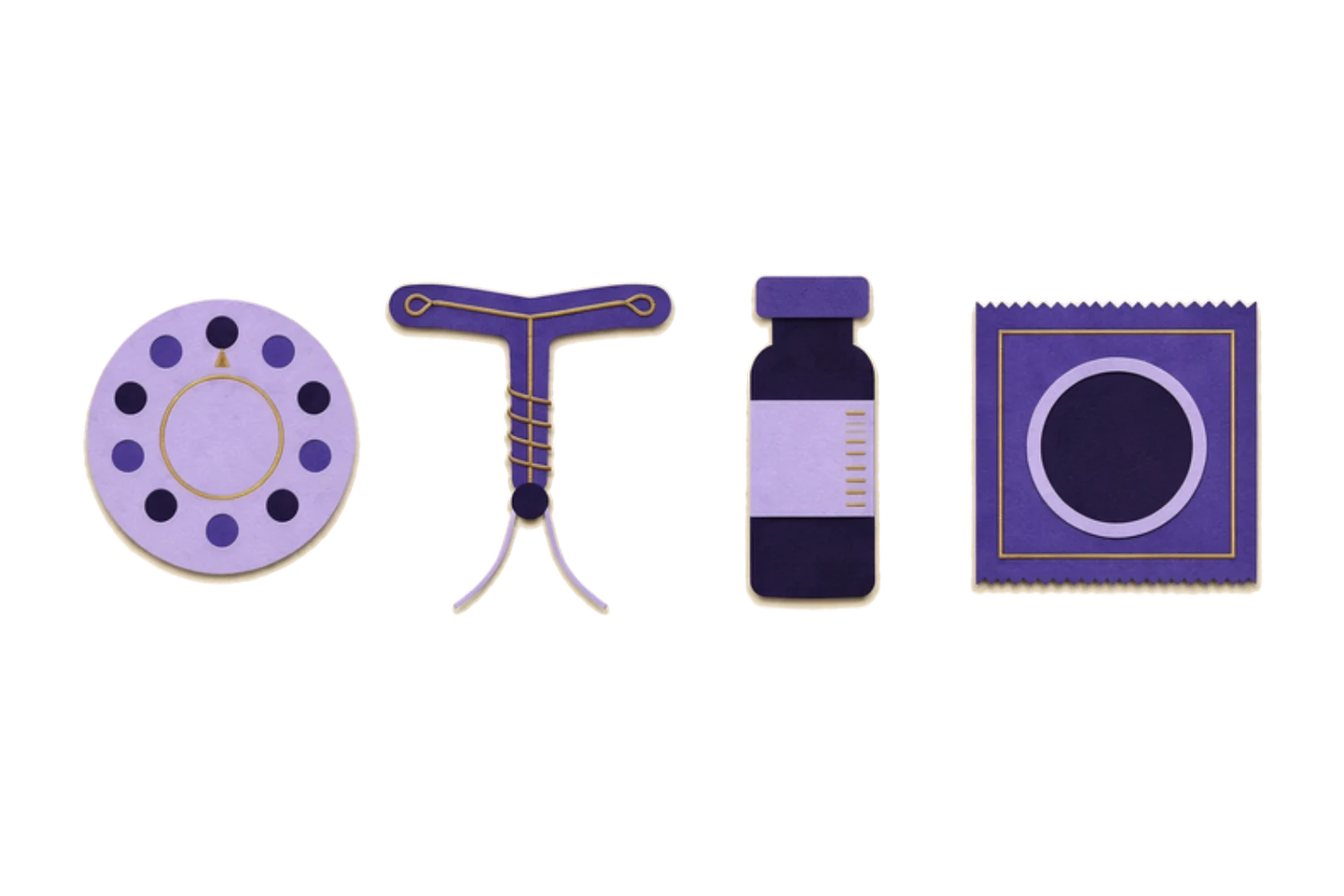
The main methods
| Method | How long it works | Good to know |
|---|---|---|
| Combined pill | Daily | Can make periods lighter and regular. Not for everyone, for example women with migraine with aura or high blood pressure. |
| Progestogen-only pill | Daily | Suitable while breastfeeding and for women who cannot take oestrogen. |
| Injection | Every 3 months | Periods often stop. Fertility can take months to return after stopping. |
| Implant | Up to 3 years | A small rod under the skin of the upper arm. Very reliable. |
| Copper coil (IUCD) | 5 to 10 years, by type | No hormones. Periods may be heavier. |
| Hormonal coil (IUS) | 5 to 8 years, by type | Periods usually become much lighter. Also used to treat heavy periods. |
| Condoms | Each time | The only method that also protects against infections. |
| Sterilisation | Permanent | For women or men who are certain they do not want more children. |
Emergency contraception
If contraception fails or was not used, emergency pills work best within 72 hours and a copper coil within 5 days. Call the clinic as soon as possible.
Questions patients ask
Which contraception is safe while breastfeeding?
The progestogen-only pill, implant, injection and both coils are suitable while breastfeeding. The combined pill is usually avoided in the first six months.
Can I have a coil if I have not had children?
Yes. Both the copper and hormonal coils can be used by women who have not been pregnant.
How reliable is each method?
With typical use, the implant and coils are over 99 percent effective, the injection about 96 percent, the pill about 93 percent, and condoms about 87 percent.
Is contraception halal?
Reversible contraception for spacing or planning children is widely accepted in Malaysia, and many Muslim couples use it. For questions about your own circumstances, a religious authority is the right person to ask.