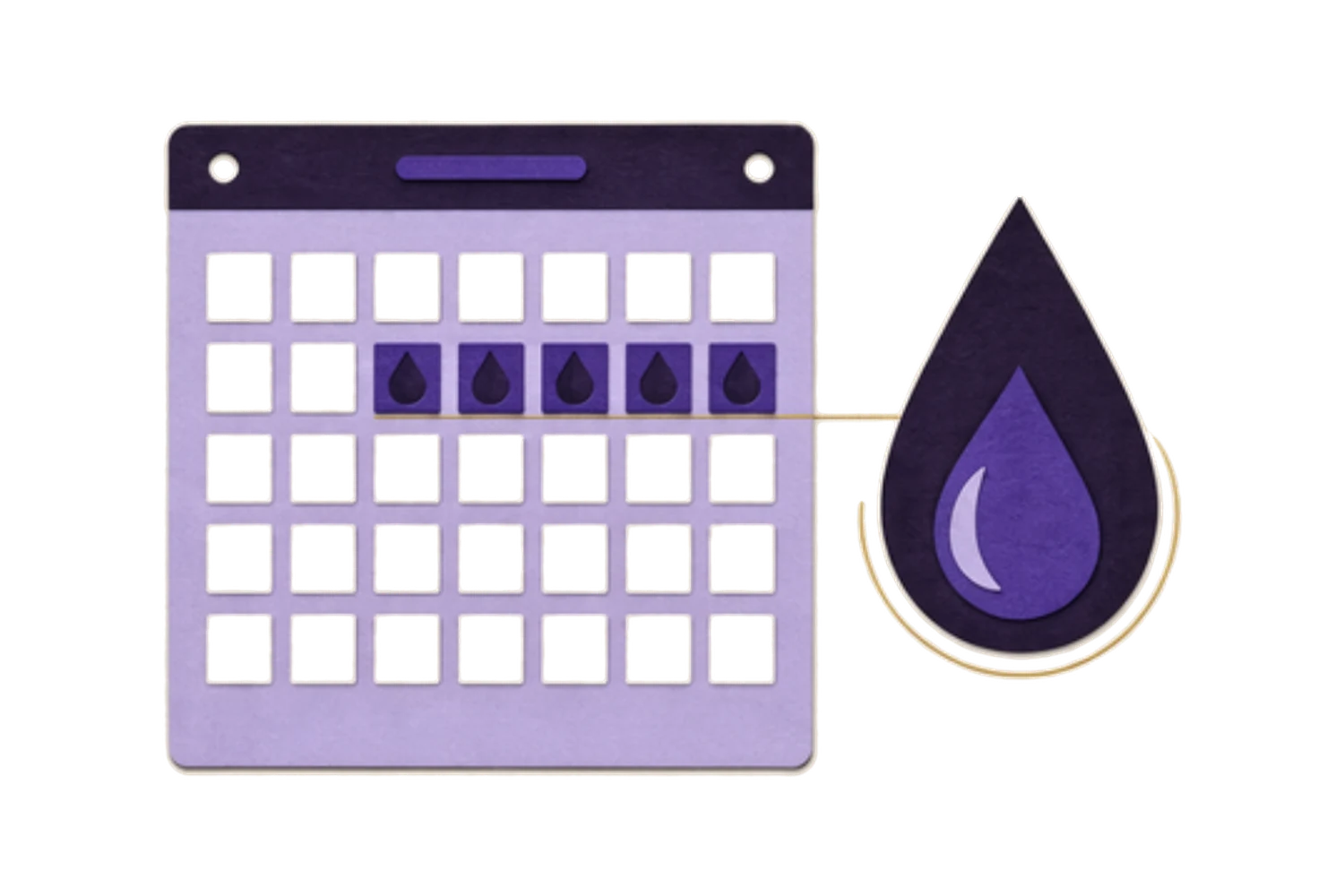
How heavy is too heavy?
A period is heavy if you change a pad or tampon every one to two hours, bleed for more than seven days, pass clots larger than a 50 sen coin, or bleed through onto clothes or bedding. Feeling tired, breathless or dizzy can mean the bleeding has made you anaemic.
Common causes
- Fibroids or polyps in the womb
- Adenomyosis, where the womb lining grows into the muscle
- Hormone imbalance, including PMOS (previously called PCOS) and the years before menopause
- Bleeding disorders and some medicines
Period pain
Mild cramps on the first day or two are normal. Pain that stops you going to work or school, pain that gets worse each year, or pain with sex or bowel movements can point to endometriosis or adenomyosis and is worth checking.
Treatment options
Treatment depends on the cause, your age and whether you want children. Options range from iron supplements and medicines that reduce bleeding, to hormonal treatments including the hormone-releasing coil, to procedures for fibroids or polyps. Dr Idyani will explain which apply to you.
Questions patients ask
Is it normal to pass clots during a period?
Small clots on heavy days are common. Clots larger than a 50 sen coin, especially with flooding, suggest the bleeding is heavier than it should be and is worth a check.
Can heavy periods cause anaemia?
Yes. Losing more blood than your body replaces lowers your iron. Tiredness, breathlessness and pale skin are the usual signs, and a simple blood test confirms it.
Will I need surgery for heavy periods?
Most women do not. Medicines and hormonal options are tried first, and surgery is discussed only when there is a specific reason such as a fibroid or polyp.